Ten advisory perspectives for every decision that matters.
Executive Board™ does not tell you what to decide. It ensures that before you decide, you have looked at the question from the angles that matter — financial, strategic, operational, legal, and more — so you are not acting on one perspective when you needed five.
As a practice owner, most decisions land entirely on you. There is no board to consult, no partners to debrief, no one who carries the same weight. That isolation affects the quality and confidence of every decision you make.
You are not deciding alone.

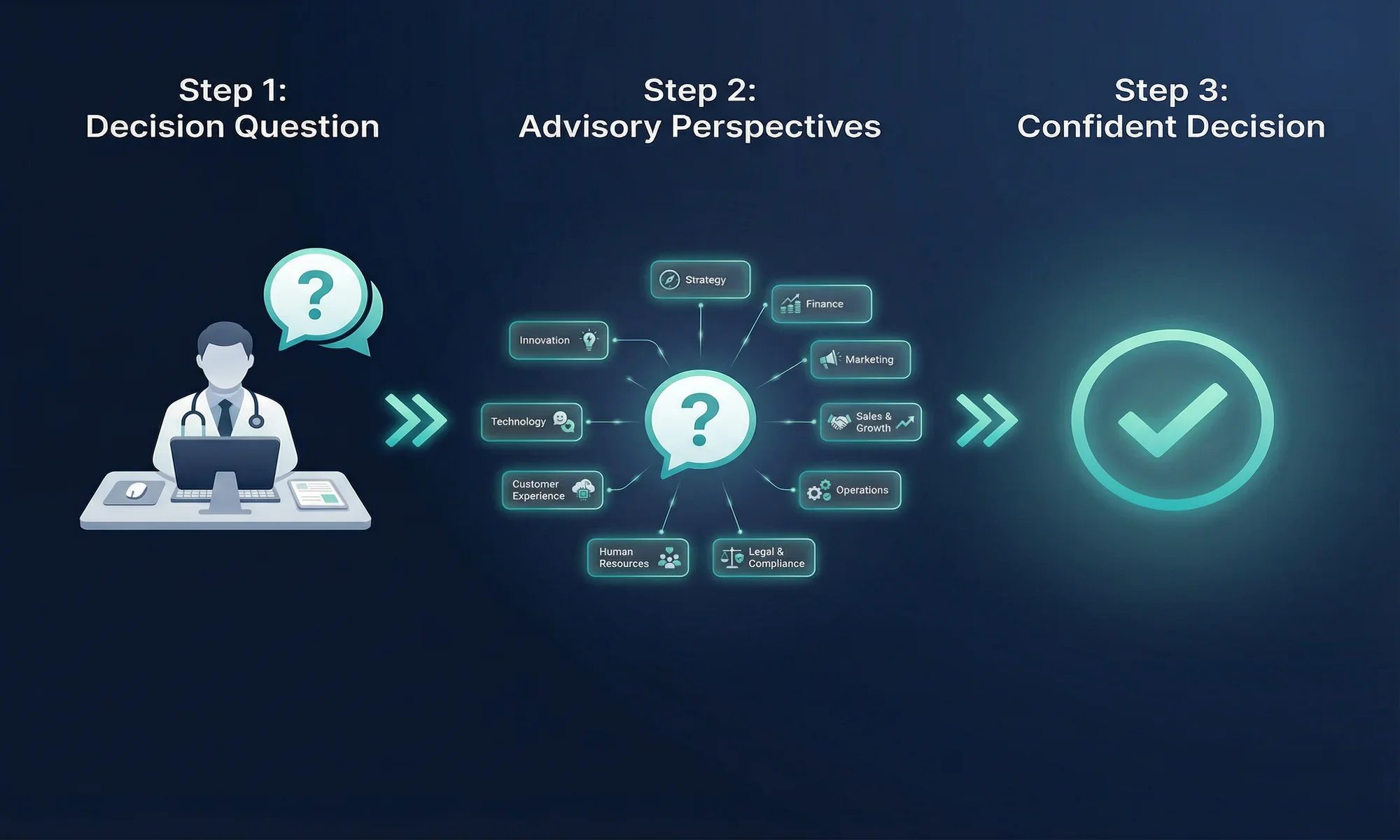
How Executive Board™ Works
Ask the Decision Question
Bring any practice question — hiring, fees, equipment, expansion — into Executive Board™. Frame it clearly and begin a structured consultation across all ten perspectives.
Review the Perspectives
Each of the ten advisory perspectives looks at your question from the angle most relevant to its domain — financial, legal, operational, and more — giving you structured input before you act.
Make a Confident Decision
You leave with a clearer picture, a documented rationale, and the confidence that comes from knowing you evaluated the decision — not just reacted to it.
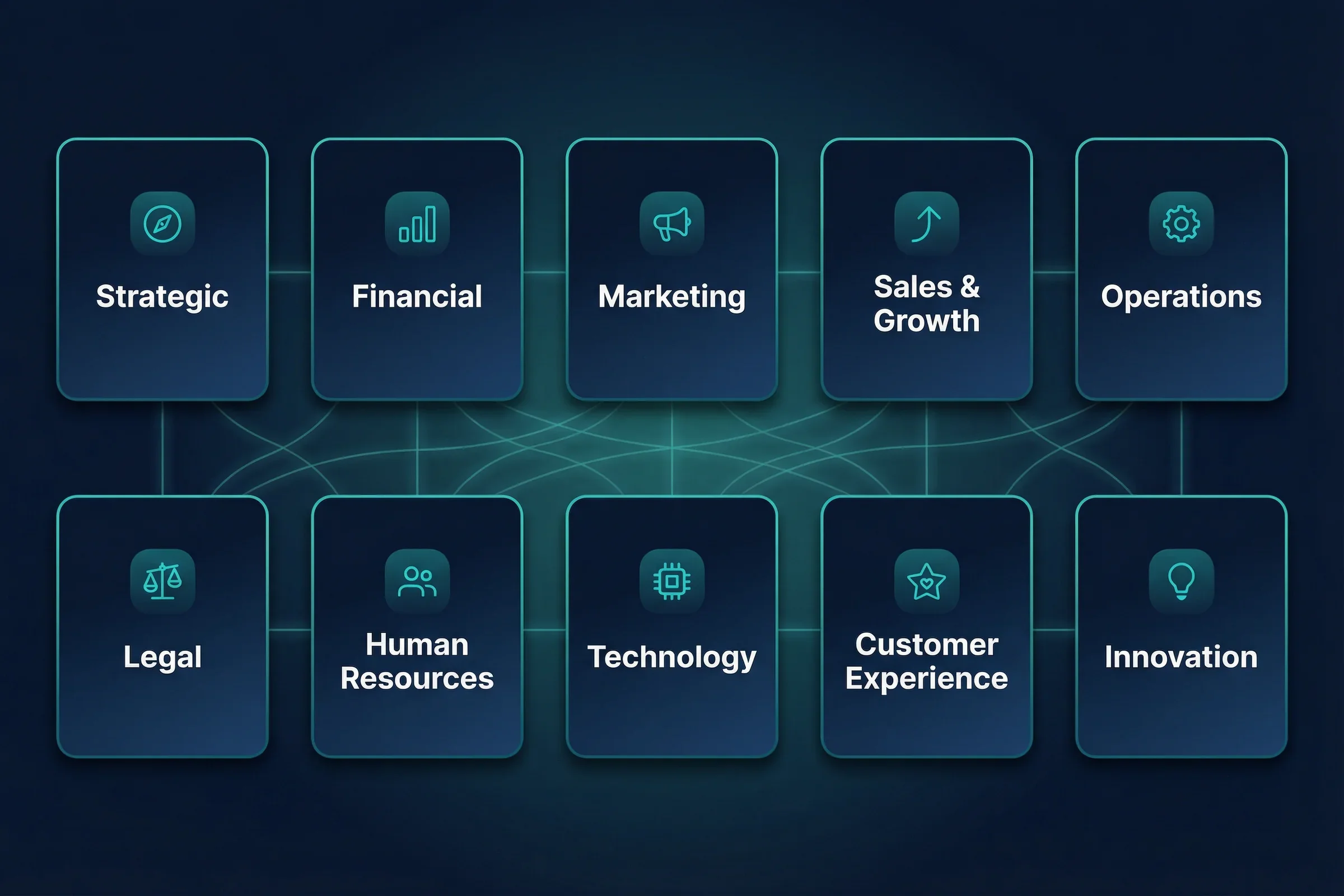
The 10 Advisory Perspectives
Strategic Advisor
Examines the long-term direction, market positioning, and competitive context for your practice.
Financial Advisor
Examines revenue impact, cost exposure, return timelines, and financial risk.
Marketing Advisor
Considers patient acquisition, referral strategy, and how the decision affects your practice's visibility and positioning.
Sales & Growth Advisor
Looks at how decisions affect case acceptance, service expansion, and revenue diversification.
Operations Advisor
Reviews workflow impact, staff implications, and whether your existing systems can support the change.
Legal & Compliance Advisor
Flags regulatory considerations, documentation requirements, and liability exposure relevant to independent practice.
Human Resources Advisor
Addresses hiring, staff communication, performance management, and team dynamics.
Technology & Innovation Advisor
Evaluates tools, systems, and investments through the lens of practical implementation and return.
Customer Experience Advisor
Keeps the patient relationship at the center — how the decision affects patient trust, satisfaction, and retention.
Innovation & Growth Advisor
Surfaces new possibilities, adjacent opportunities, and longer-horizon moves your practice could consider.
Why this decision framework matters.
Most practice owners make major decisions in isolation, under time pressure, from a single perspective. The results are often correctable — but rarely free.
Typical decision making
- One perspective dominates — often the most urgent one
- Decisions made under time pressure, before the full picture forms
- Key angles overlooked: legal exposure, staff impact, patient communication
- No documented rationale — hard to revisit or explain later
- Isolation means no check on blind spots or assumptions
Executive Board™ decision process
- All ten advisory perspectives reviewed before acting
- Structured process slows reaction, improves deliberation
- Financial, legal, operational, and patient-facing angles all covered
- Each consultation produces a documented, revisable record
- You decide — with the support of the full picture